


Japanese-Inspired Garden with Pond and Meandering Paths
A large Japanese-inspired garden brought together with meandering gravel paths, natural stone, a pond, feature rocks, Japanese maples and a tranquil gravel garden designed for quiet contemplation.
This project in 20 seconds
This substantial Japanese-inspired garden has been developed in phases around a large pond and a network of carefully considered spaces.
The work includes Japanese-style stonework, resin-bonded gravel paths, Millboard decking, new turf and planting, together with stone lanterns, feature rocks and a large gravel area designed for raking and quiet contemplation.
Rather than creating direct routes across the garden, the paths deliberately curve and incorporate different materials along the way, encouraging people to slow down and experience different parts of the landscape.
Further planting and elements of the wider design will continue to develop as the garden matures.
Creating a Japanese garden on a much larger scale
Hilary and Nick already knew what they enjoyed about Japanese gardens from their previous home, but this property offered the opportunity to interpret those ideas on a much larger scale.
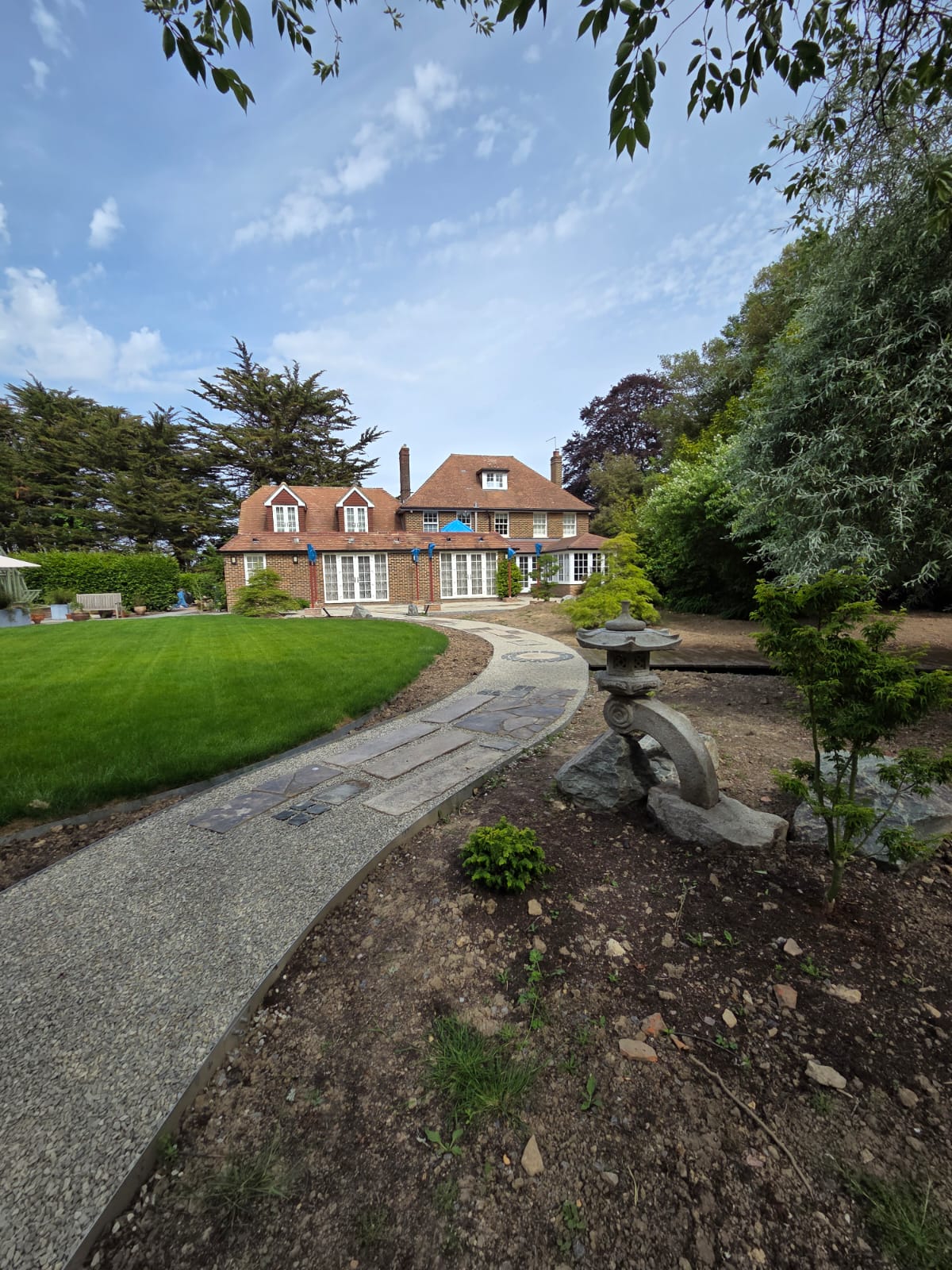
The generous lawn remains an important open space, while paths curve around it and draw the eye towards different areas of the garden.
Rather than trying to fill such a large site with one dominant feature, the design creates a sequence of experiences: open lawn, shaded paths, water, stone, gravel and quieter areas surrounded by mature planting.
That sense of discovery is one of the elements that gives the garden its character.
Paths designed to slow the journey
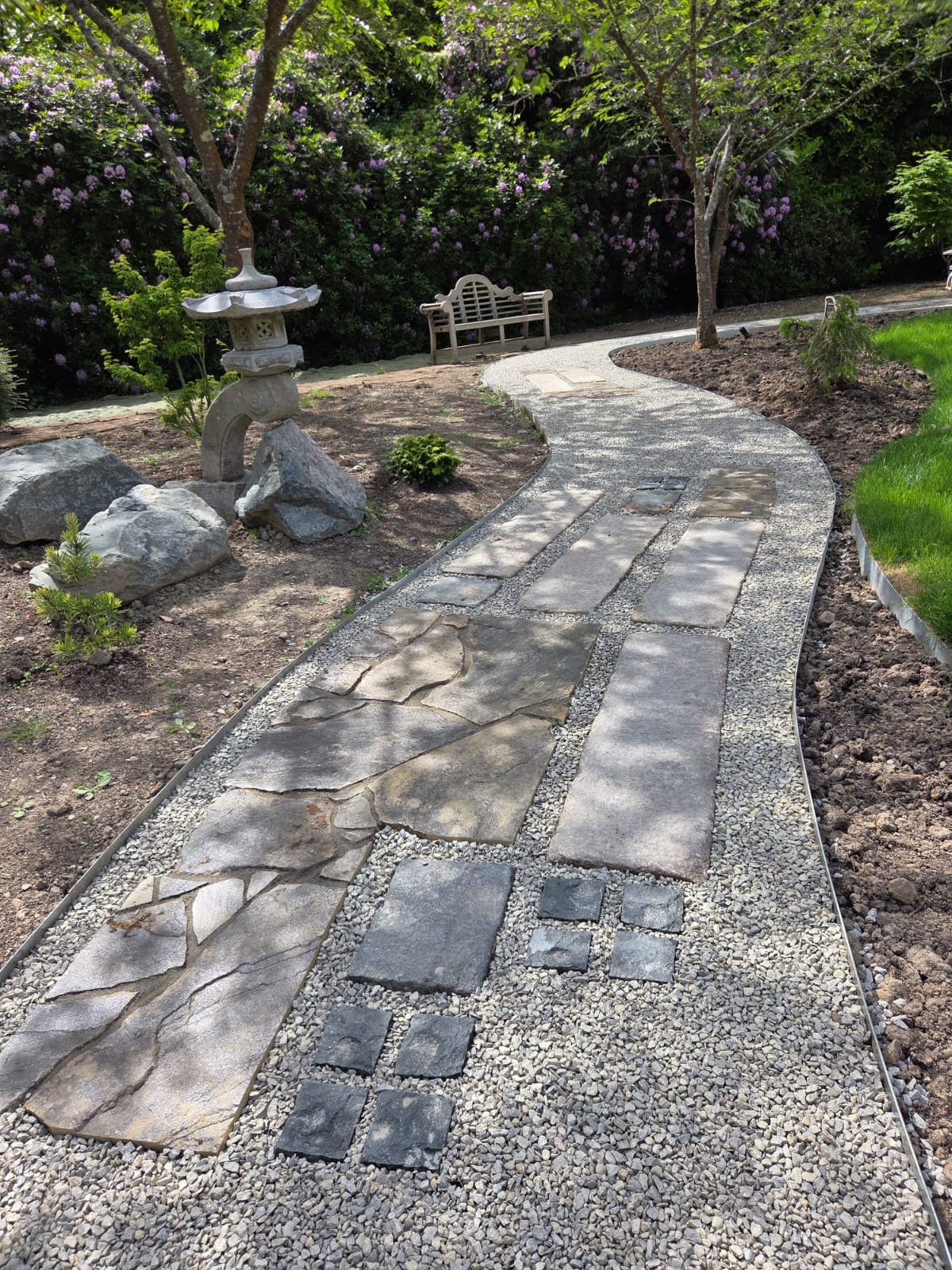
The pathways are deliberately much more than practical routes through the garden.
Their curves prevent you seeing everything at once, while lengths of stone, irregular paving and smaller contrasting pieces are incorporated into the gravel at changing intervals.
This naturally alters the way you walk through the space. Instead of simply taking the quickest route from one side of the garden to the other, the path encourages a slower pace and gives different views time to reveal themselves.
That approach is particularly well suited to a Japanese-inspired garden, where the journey through the landscape matters just as much as the destination.
Making the paving part of the design
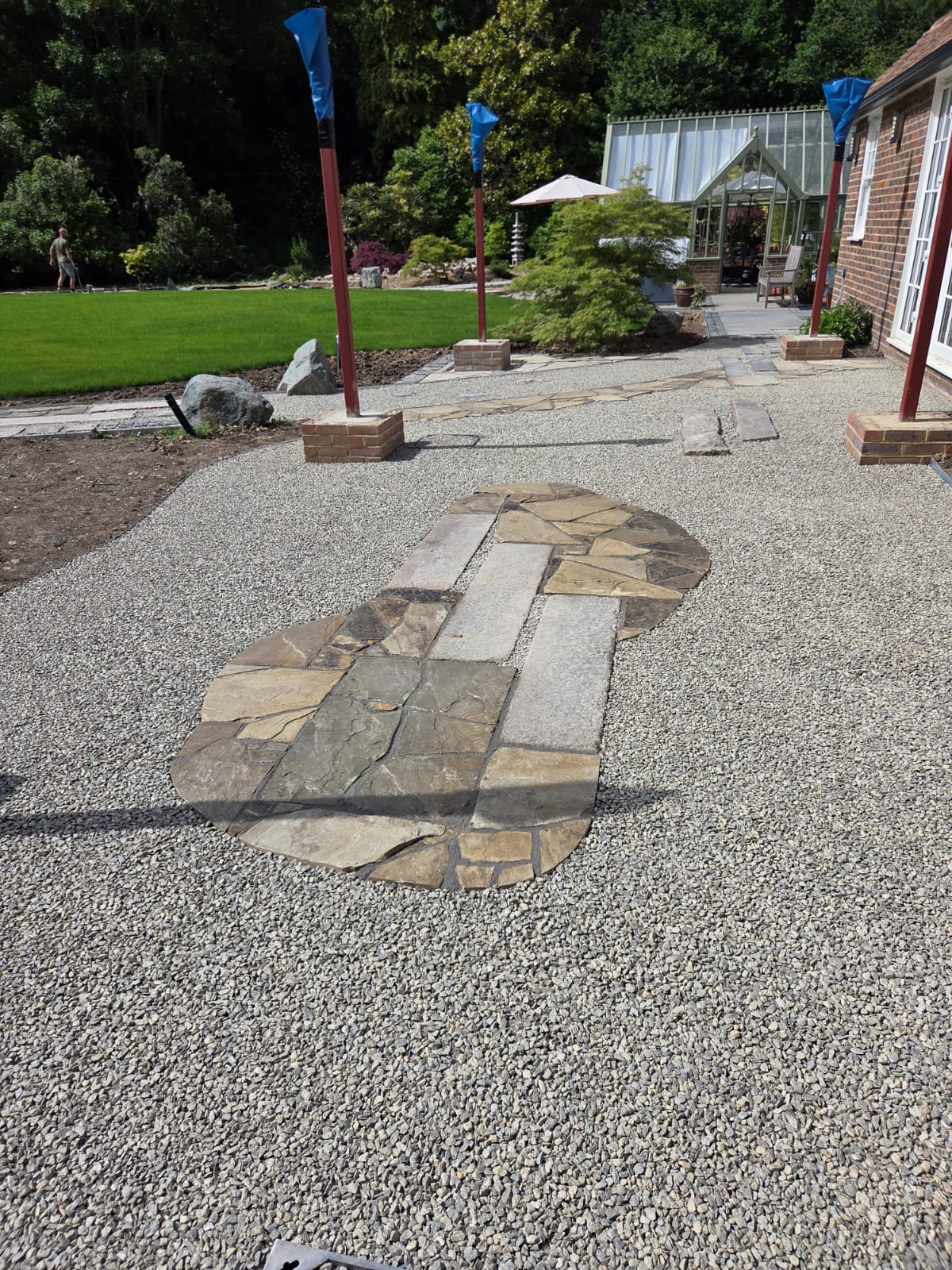
Close to the house, the same principle is carried through into the hard landscaping.
Large rectangular stones sit alongside pieces of irregular York stone, forming distinctive shapes within the lighter gravel surface.
The paving is intentionally informal rather than arranged as a conventional uniform patio.
That contrast between ordered and irregular materials helps the hard landscaping feel part of the garden itself, rather than simply a surface added around the building.
Water, rockwork and a stone bridge
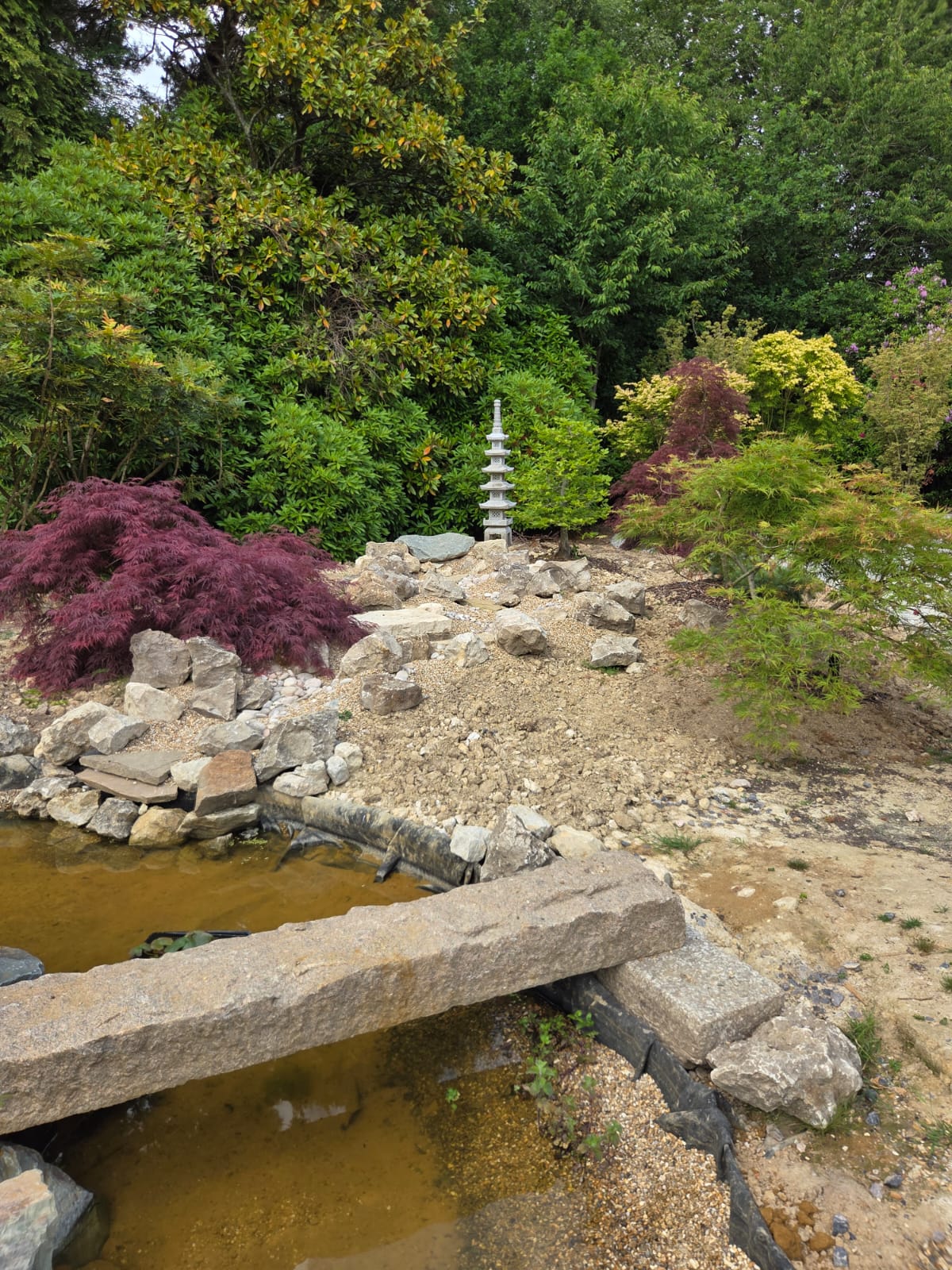
The pond is one of the major focal points within the garden and is surrounded by carefully positioned rockwork and Japanese-inspired planting.
A substantial stone slab creates a simple bridge across part of the water, while different sizes and shapes of stone help the pond sit naturally within the surrounding landscape.
The wider design also allows for extensive aquatic planting as the area matures.
A Japanese tea hut with floating-style decking forms part of the overall scheme beside the pond, adding another destination within this part of the garden as the project continues to develop.
Stone lanterns as focal points
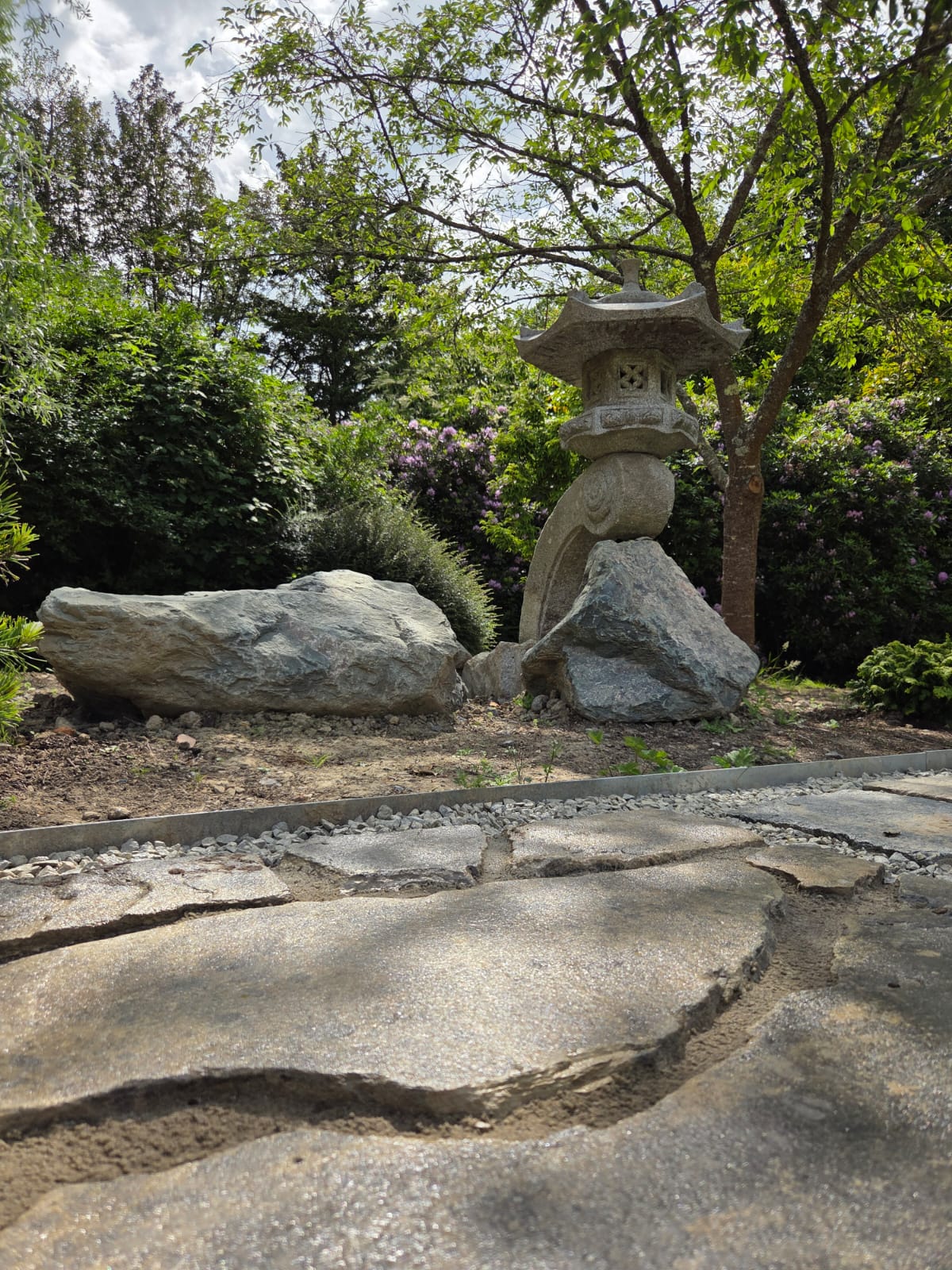
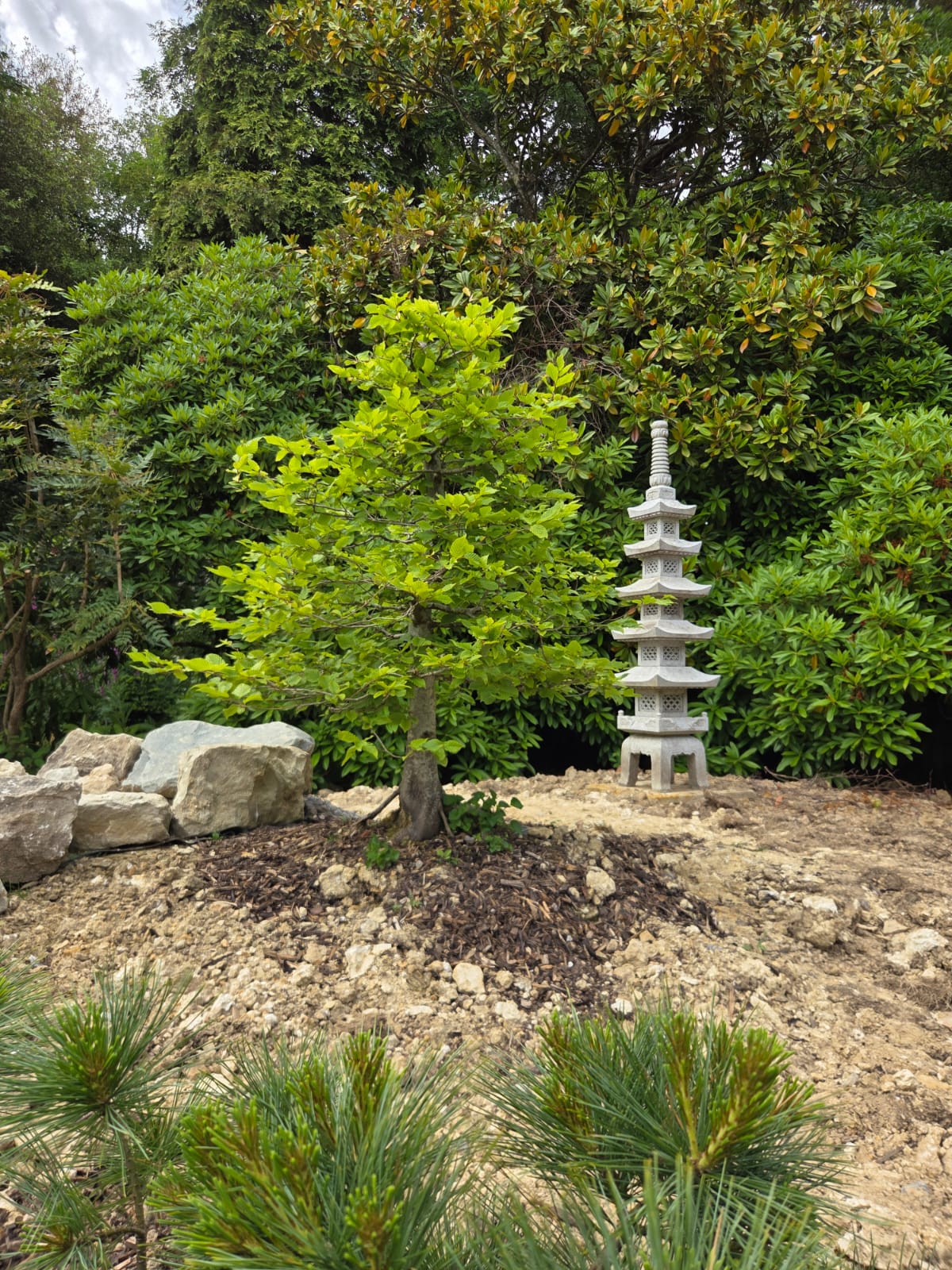
Traditional Japanese-style stone lanterns appear at different points throughout the garden.
Rather than positioning them in isolation, they have been combined with substantial feature rocks and existing planting so that they feel rooted within the landscape.
Their position alongside the pathways also creates moments of interest as you move around the garden.
Details like these help establish the Japanese character of the scheme without relying on any single feature to do all the work.
A gravel garden for quiet contemplation
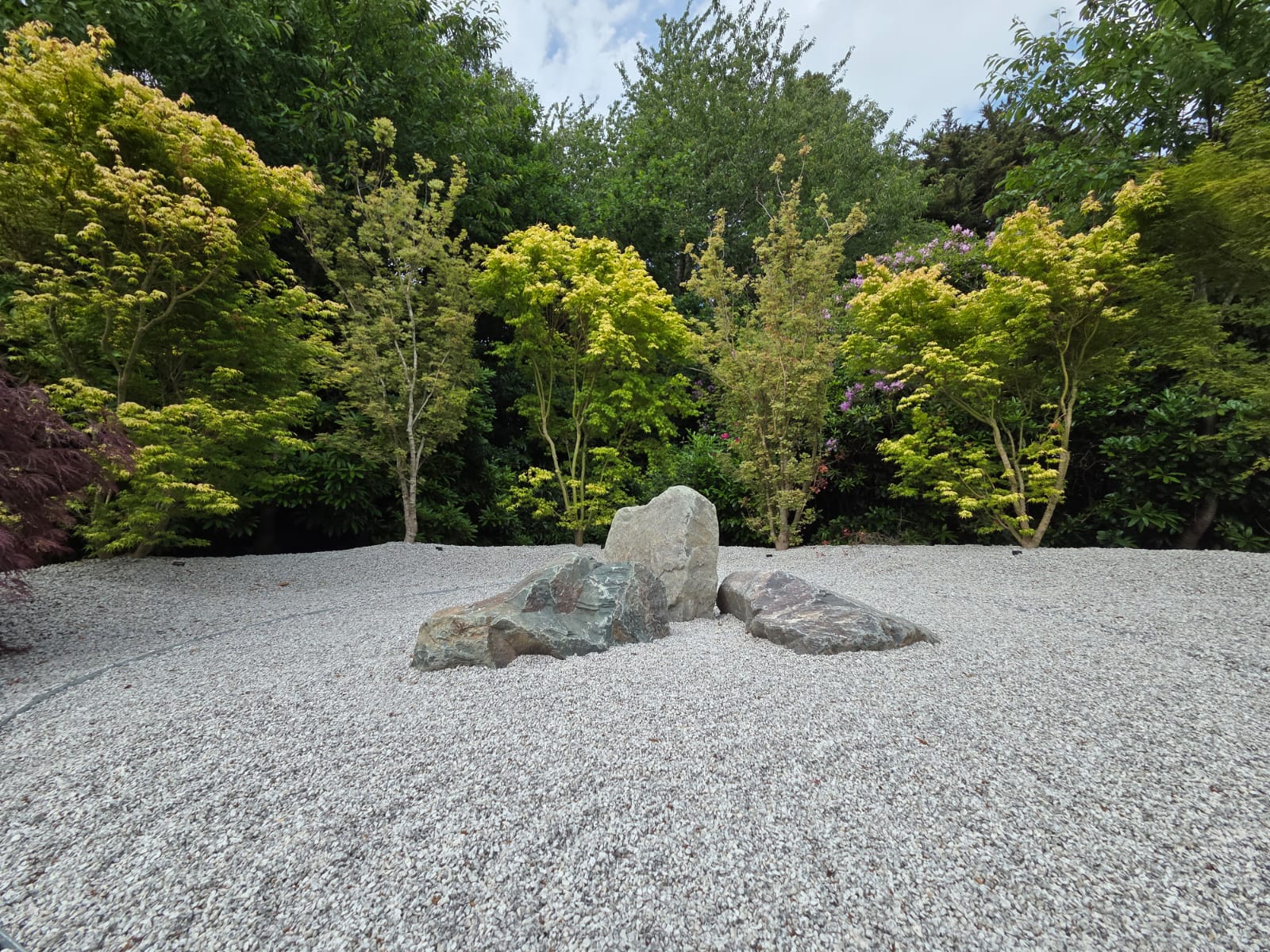
One of the calmest areas of the project is the large gravel garden, framed by Japanese maples and established greenery.
Three feature stones form the centre of the composition, surrounded by an intentionally simple expanse of pale gravel.
The area has been designed so the gravel can be raked into patterns, drawing on the traditions of Japanese dry gardens.
Leaving this amount of open space around the stones is important. Rather than filling every part of the garden, the simplicity gives the eye somewhere to rest and provides a strong contrast with the richer planting around its edges.
A winding Millboard walkway through the trees
The character changes again as the garden moves into a more enclosed, wooded area.
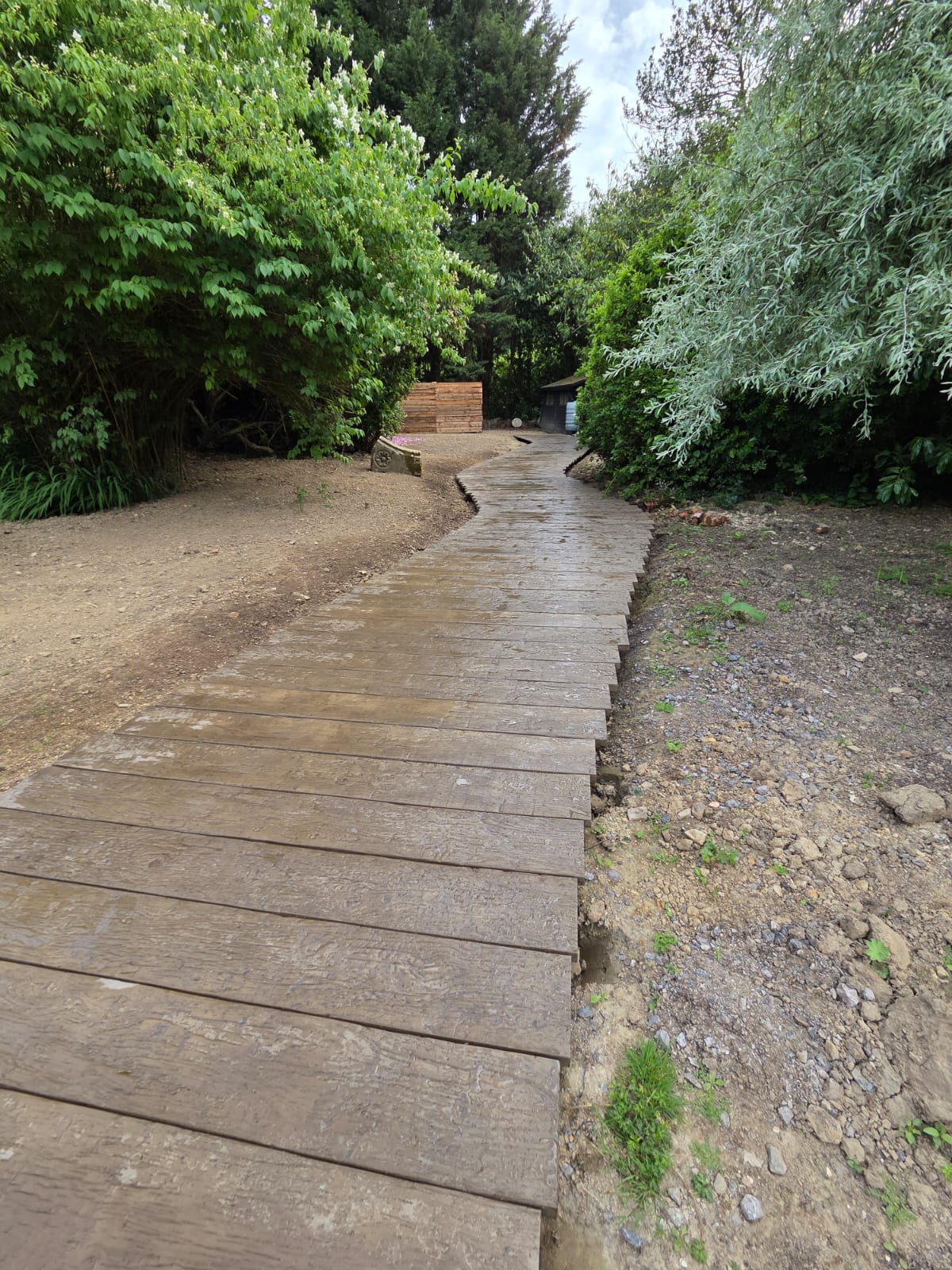
Here, a winding Millboard walkway creates a defined route beneath the surrounding trees and shrubs.
The timber-effect surface has a softer appearance than conventional paving and works naturally within this shaded part of the garden.
Its gently changing direction continues the idea used throughout the project: paths should lead people through the landscape rather than simply cutting directly across it.
Planting that provides structure, colour and contrast
Planting is fundamental to the Japanese influence, with specimen trees and contrasting foliage providing structure around the harder materials.
Japanese maples bring both colour and delicate leaf forms, while existing mature trees and evergreen shrubs create a much denser backdrop.
The combination allows individual stone features and ornaments to stand out without appearing disconnected from their surroundings.
As the newer planting continues to establish, the transitions between gravel, rockwork, water and established vegetation will become softer still.
Want us to create your ideal outdoor space?
Got Questions? We've got answers
A Japanese-inspired garden is usually created through the relationship between water, stone, gravel, planting and the way people move through the landscape. This project brings those elements together through its pond, feature rocks, stone lanterns, Japanese maples, gravel garden and meandering pathways.
Paths can deliberately influence how quickly you move and where you look. Here, curves and changing stone details encourage a slower journey through the garden, allowing different views and features to reveal themselves gradually.
A gravel garden creates a deliberately simple, contemplative space. Gravel can be raked into patterns around carefully positioned rocks, while the open surface provides a visual contrast with surrounding trees and planting.
Yes. The overall character is more important than restricting the garden to traditional materials. On this project, Millboard decking and resin-bonded gravel sit alongside natural stone, water, specimen planting and Japanese-inspired ornaments.
Yes. For a substantial garden, developing the project in stages can work particularly well. It allows different areas to be created progressively while planting establishes and the garden continues to mature around the overall design.