


Phase One of a Japanese-Inspired Garden Build
A large Japanese-inspired garden build, delivered as part of a carefully planned multi-phase landscaping project.
Phase one has included drainage, pond works, main construction, curved pathways, gravel areas, feature stonework and structural elements, with planting still to follow.
This project in 20 seconds
This project has been over a year in the planning, with Cowen Landscapes returning at different stages to build the garden properly from the ground up.
Phase one has focused on the main structure of the garden, including drainage, pond works, pathways, gravel areas and natural stone features.
The result is already taking shape as a calm, flowing Japanese-inspired garden, with planting due to complete the next stage of the transformation.
A long-term garden build, planned in phases
This was never intended to be a quick garden makeover.
The project has been carefully planned over more than a year, with each stage designed to support the next. The first visit focused on the essential groundwork, drainage and pond works, before the team returned for the main construction phase.
This phased approach allowed the garden to be built with the right structure beneath the surface, as well as the visual detail above it.
The garden is already showing what can be achieved when a large outdoor space is approached with patience, planning and proper coordination.
Creating structure with curves, gravel and pathways
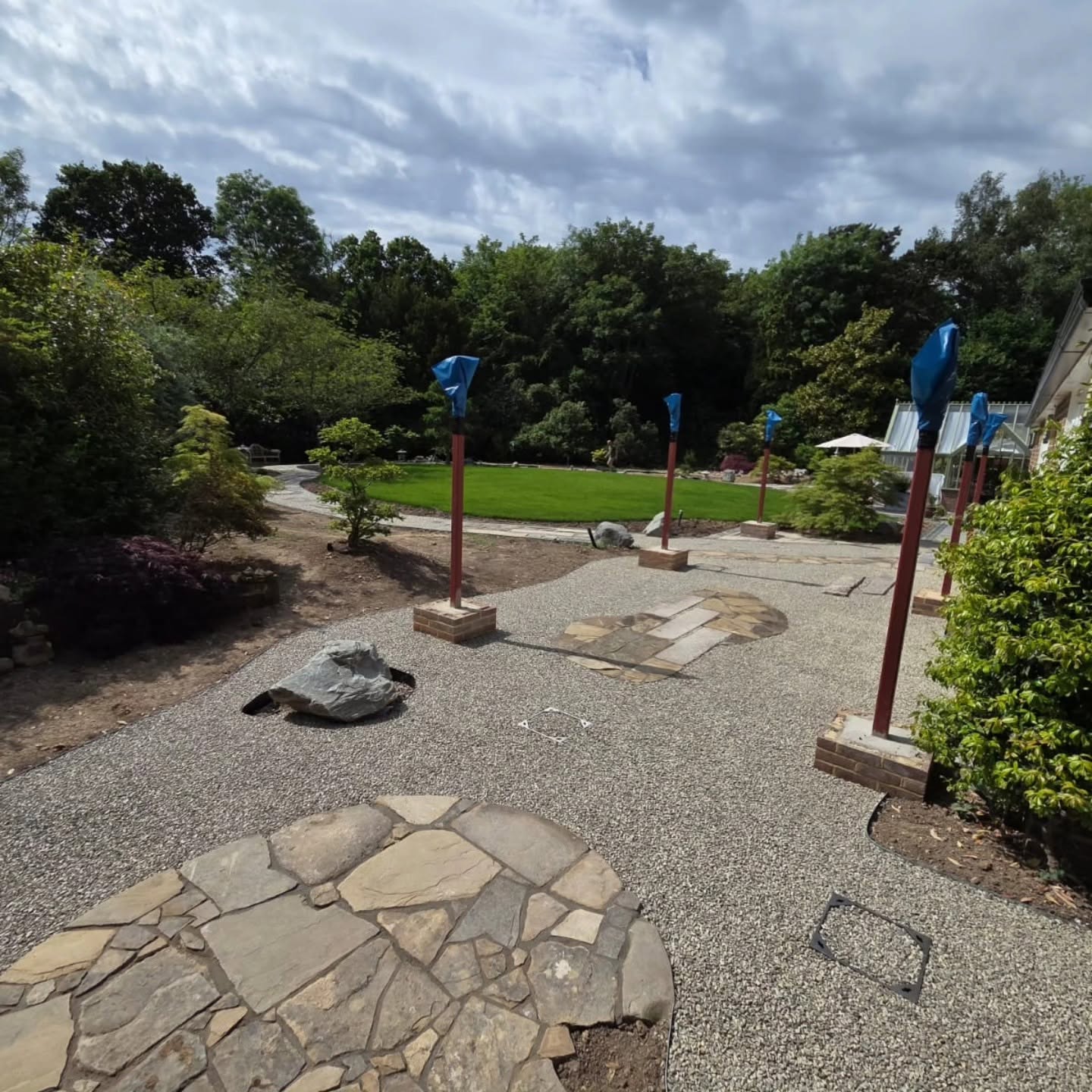
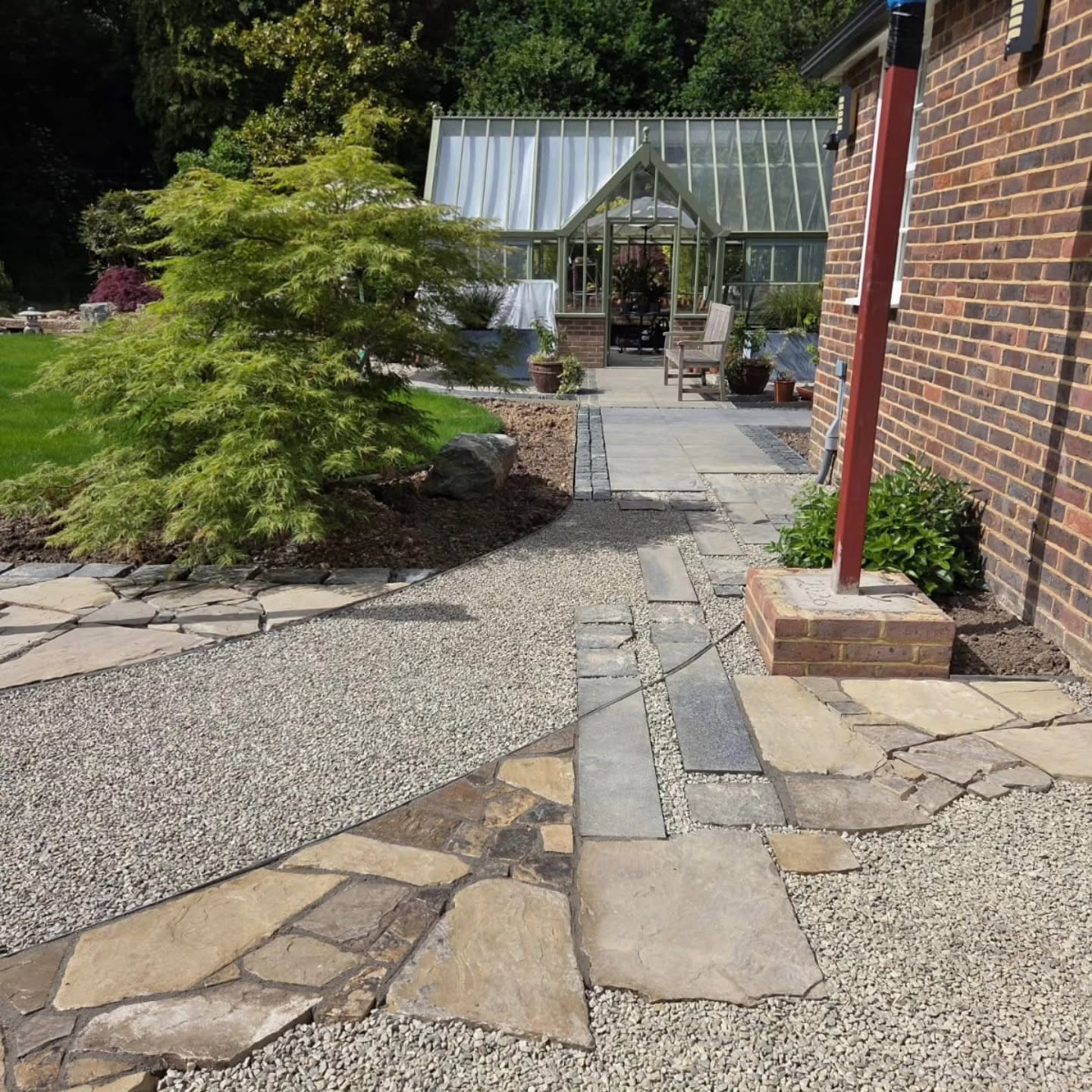
One of the most important parts of this phase was creating the movement through the garden.
Rather than relying on straight lines, the design uses sweeping curves to lead the eye and guide people through the space. The gravel pathways sit alongside the lawn, pond area and planted borders, helping the garden feel calm and natural rather than rigid.
The curved edging gives the paths a clean definition, while the gravel surface creates a softer feel than solid paving alone.
This approach works particularly well in a Japanese-inspired garden, where routes, views and pauses are all part of the experience.
Feature stonework and natural detailing
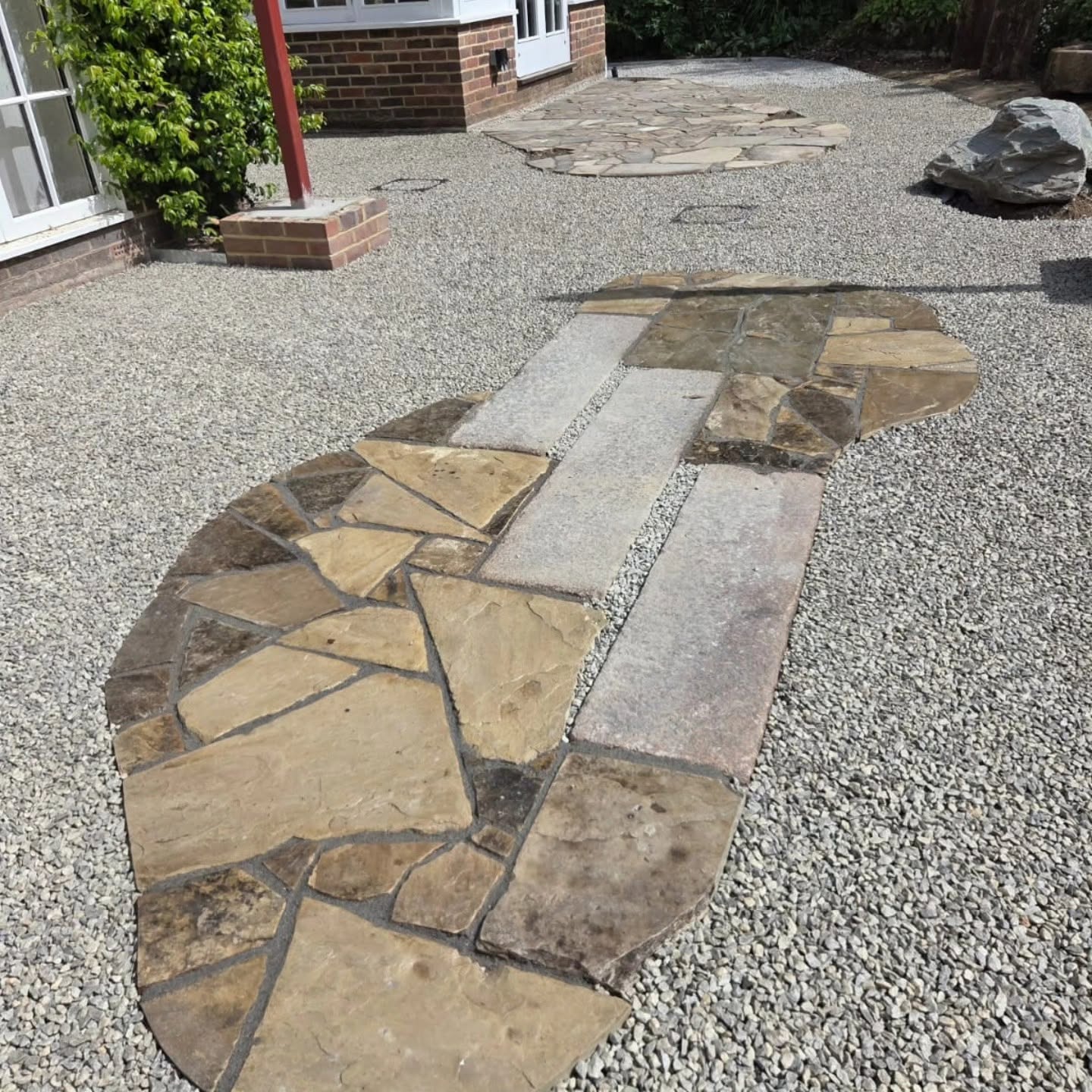
The stonework is one of the standout details of this project.
Natural stone has been used to create irregular, organic features within the gravel, adding contrast, texture and craftsmanship. These areas help break up the larger gravel surfaces and give the garden a more hand-built, individual character.
The mix of stone sizes, colours and shapes creates a finish that feels established rather than overly formal. It also works beautifully with the larger boulders and rock features used elsewhere in the garden.
These details take time, but they are what give a project of this scale its depth and personality.
Pond works and Japanese-inspired focal points
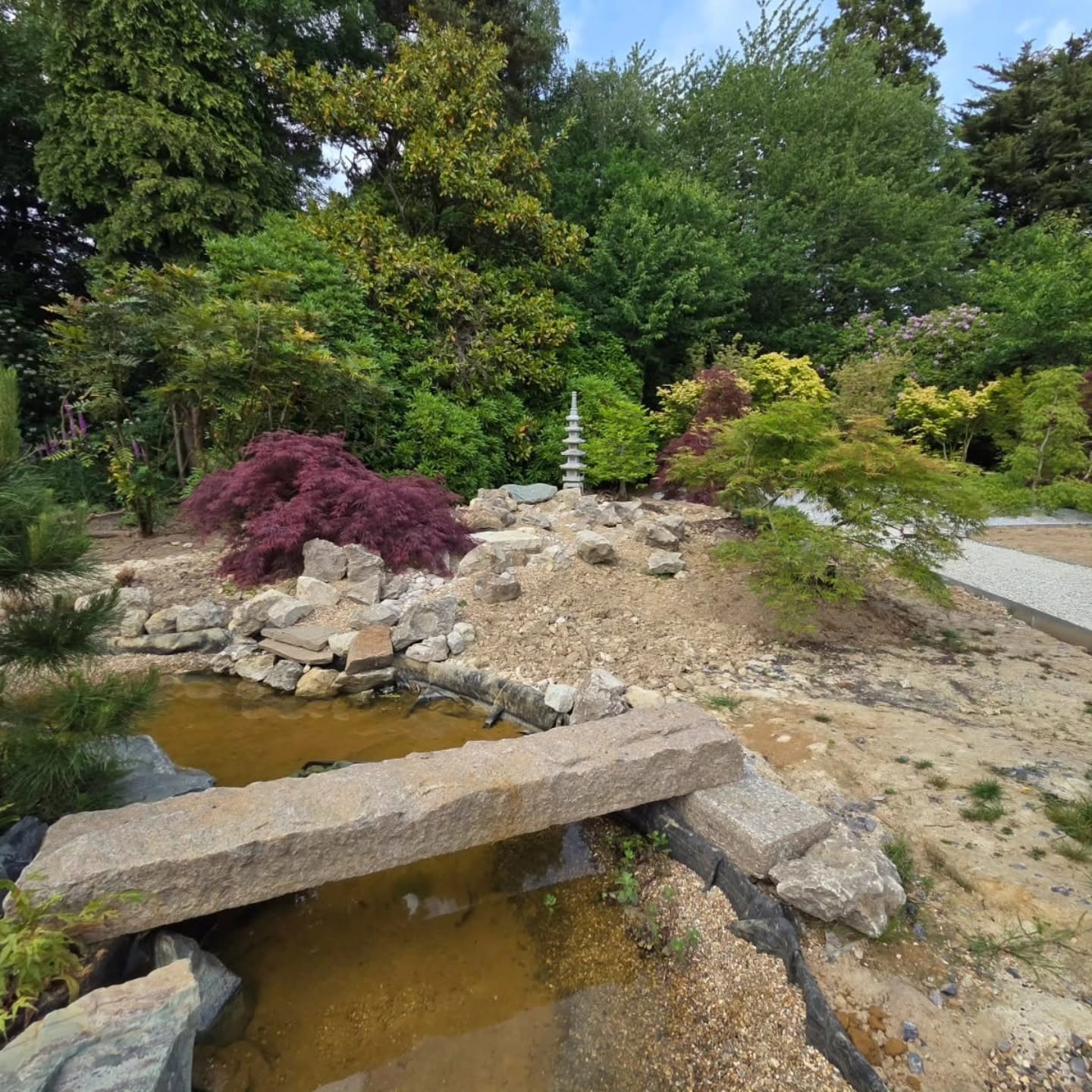
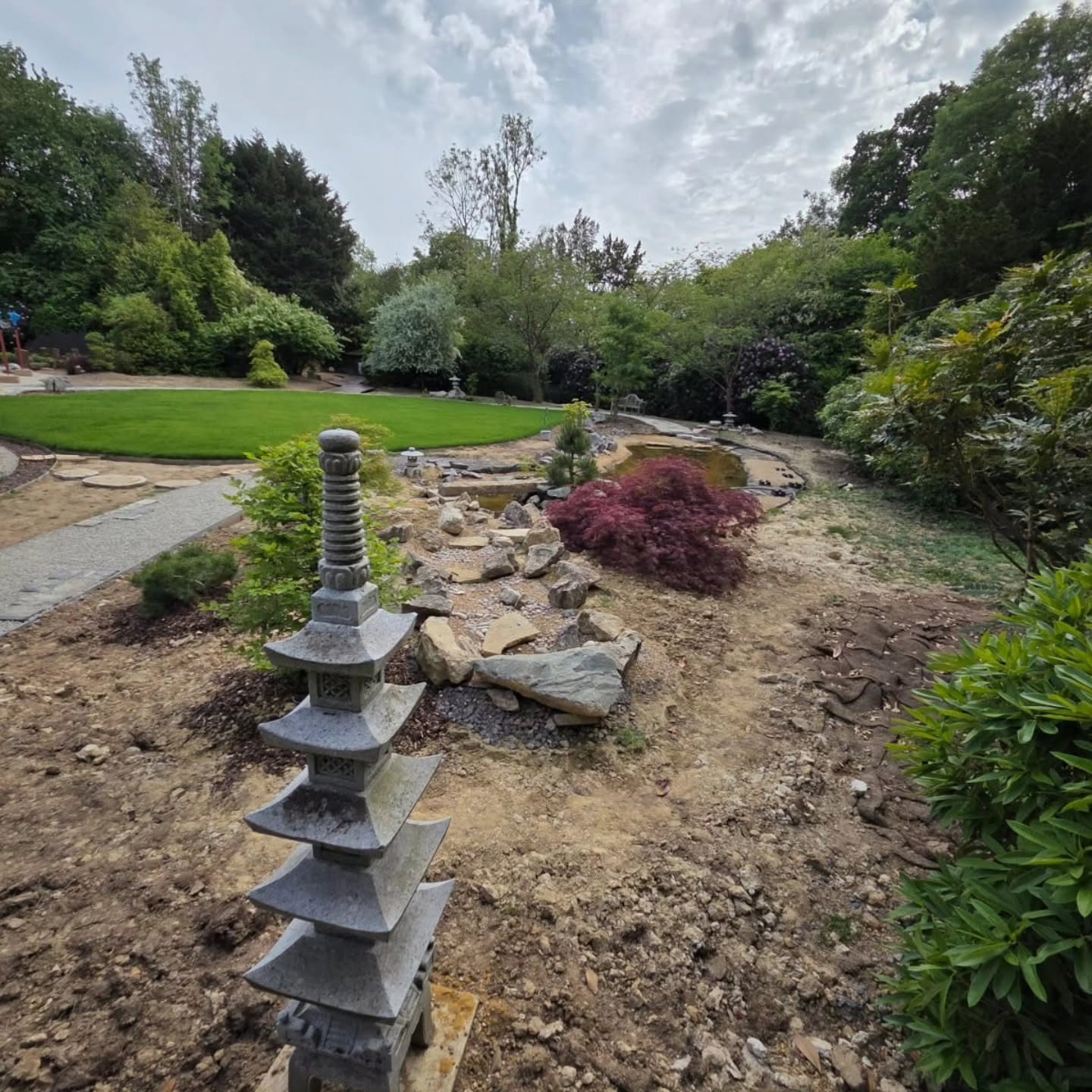
The pond area is a key part of the Japanese-inspired feel of the garden.
Natural rock, gravel, planting pockets and ornamental features all help create a more tranquil setting. Even before the final planting phase, the pond is beginning to feel like a destination within the garden rather than just a feature added into the space.
The stone lantern and rock arrangement add structure and atmosphere, while the surrounding pathways allow the garden to be viewed from different angles.
As the planting develops in the next phase, this part of the garden should become even softer and more immersive.
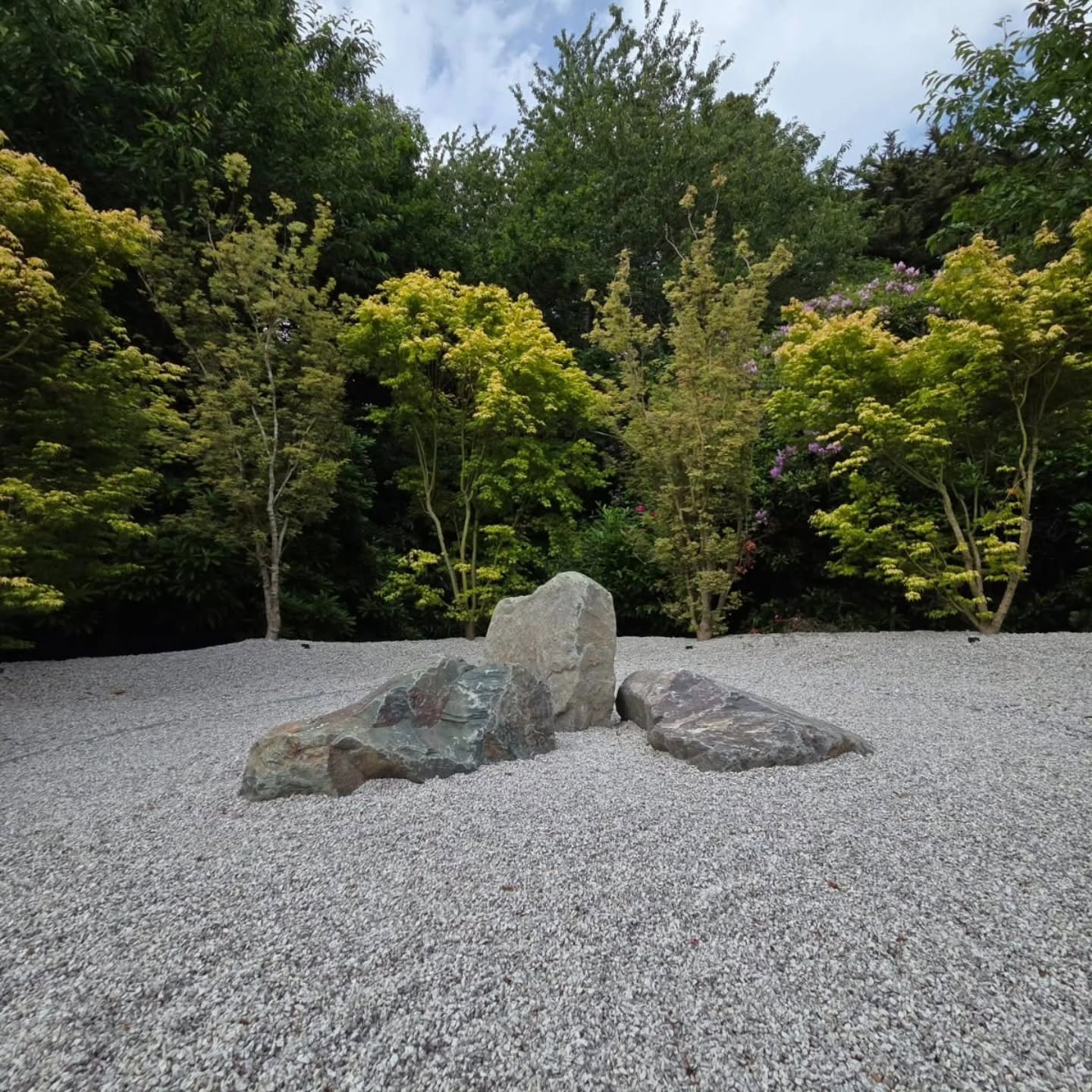
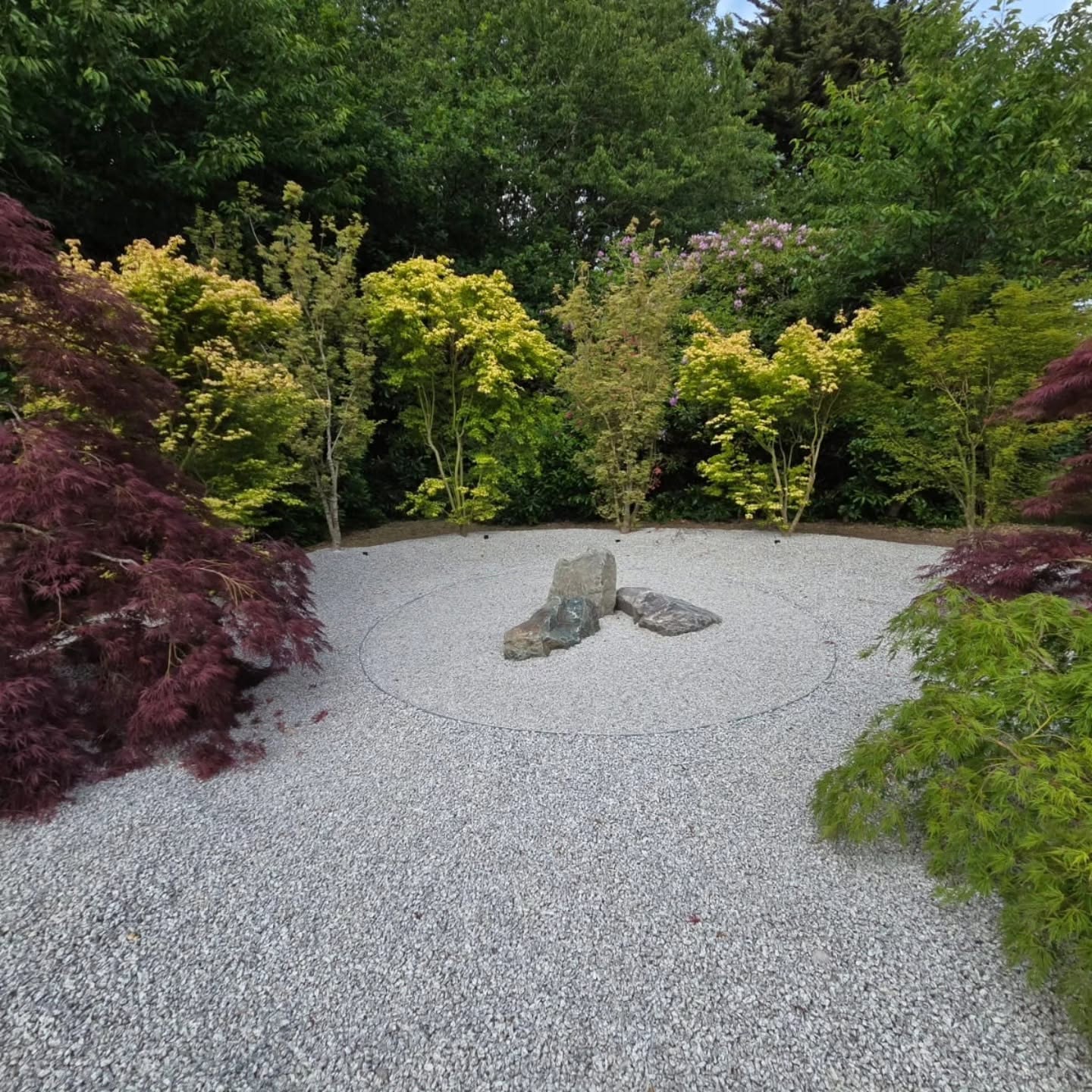
A calm gravel garden with statement rocks
This area shows the quieter side of the project.
The pale gravel creates a calm, open surface, while the central rocks act as a simple focal point. The surrounding trees and shrubs frame the space, giving it a sense of enclosure without making it feel crowded.
Japanese-inspired gardens often rely on balance, negative space and carefully placed features. This section of the garden already has that feeling, with the gravel, stone and planting working together in a very understated way.
It is a space that will continue to improve as the surrounding planting matures.
Connecting the wider garden
A garden of this size needs more than attractive features. It needs to work as a whole.
The new pathways and gravel areas help connect the different parts of the garden, including the house, greenhouse, lawn, pond and more secluded garden areas.
By linking these spaces together, the garden becomes easier to move through and more enjoyable to explore. Each area has its own purpose and character, but the materials help tie everything together.
The result is a landscape that feels considered, rather than a collection of separate features.
Built by a coordinated team
Projects on this scale rely on teamwork.
There is a huge amount of planning and coordination behind the scenes, from preparing the ground and managing levels through to setting out paths, positioning stonework and building each feature in the right order.
The team have put a great deal into this phase, and the garden is now starting to show the reward for that effort.
With the main construction phase nearly complete, the structure of the garden is in place. The next stages will bring more planting, more softness and more seasonal interest.
What happens next?
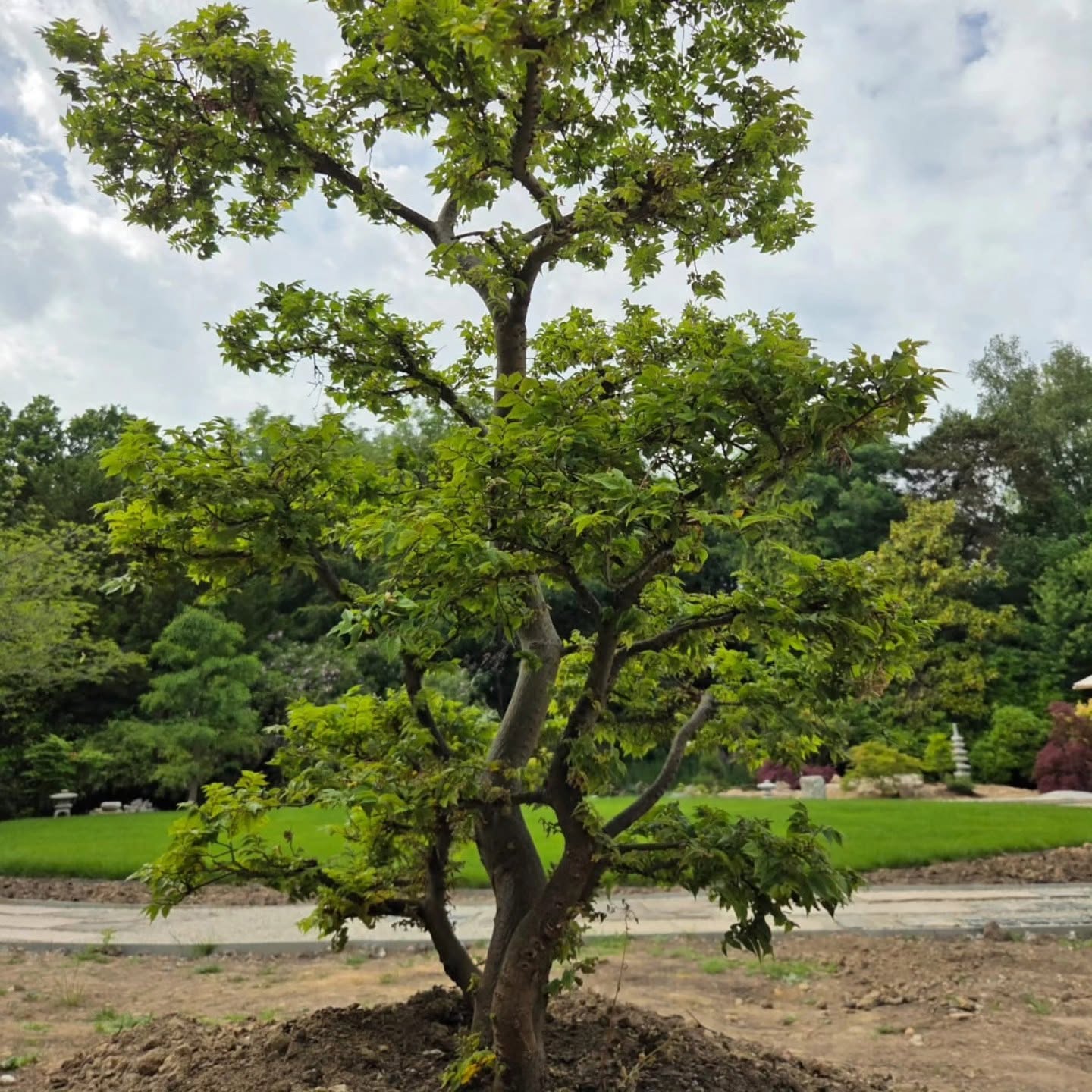
This is still a garden in progress.
The first phase has created the bones of the space: drainage, pond works, paths, gravel areas, stone features and the main structure of the garden. The next phase will focus on planting, which will soften the edges and bring the Japanese-inspired design to life.
Cowen Landscapes will return again for the planting stage, before a later phase tackles the front garden.
For now, the garden is already becoming something special — calm, structured and full of potential.
Want us to create your ideal outdoor space?
Got Questions? We've got answers
Yes. Larger garden projects are often best completed in phases, especially when they include drainage, pond works, hard landscaping and planting. Phasing allows each stage to be planned properly and completed in the right order.
Japanese-inspired gardens often use natural materials, flowing paths, gravel, rocks, water, carefully placed trees and calm planting. The aim is usually to create balance, movement and a peaceful atmosphere rather than a highly formal layout.
Drainage is important because it helps protect the structure of the garden and manage water properly. This is especially important where there are ponds, large gravel areas, paths, lawns and different levels.
Planting can be added after the main construction work is complete, once levels, paths, beds and key features are in place. In larger projects, it is often planned as a separate phase so the right plants can be chosen and installed at the best time.
Yes. Cowen Landscapes can manage complete garden transformations, including design, groundwork, drainage, patios, pathways, ponds, planting, lawns and wider landscaping work across Maidstone and the surrounding areas.