


Oast House Garden Headcorn
A complete garden build behind a Kentish oast house in Headcorn, with a wildlife pond, porcelain paths and patio, stepping stones and a new lawn. About seven weeks on site.
This project in 20 seconds
The garden behind this Headcorn oast house was a bare building site. Over about seven weeks in 2022, we turned it into a finished garden that suits the house.
We cleared and levelled the ground, laid porcelain paths, steps and a patio, and built a walkway beside a new wildlife pond. Stepping stones set into fresh turf finish it off.
The client, Nicola, says it has really transformed how they use the space.
Where we started
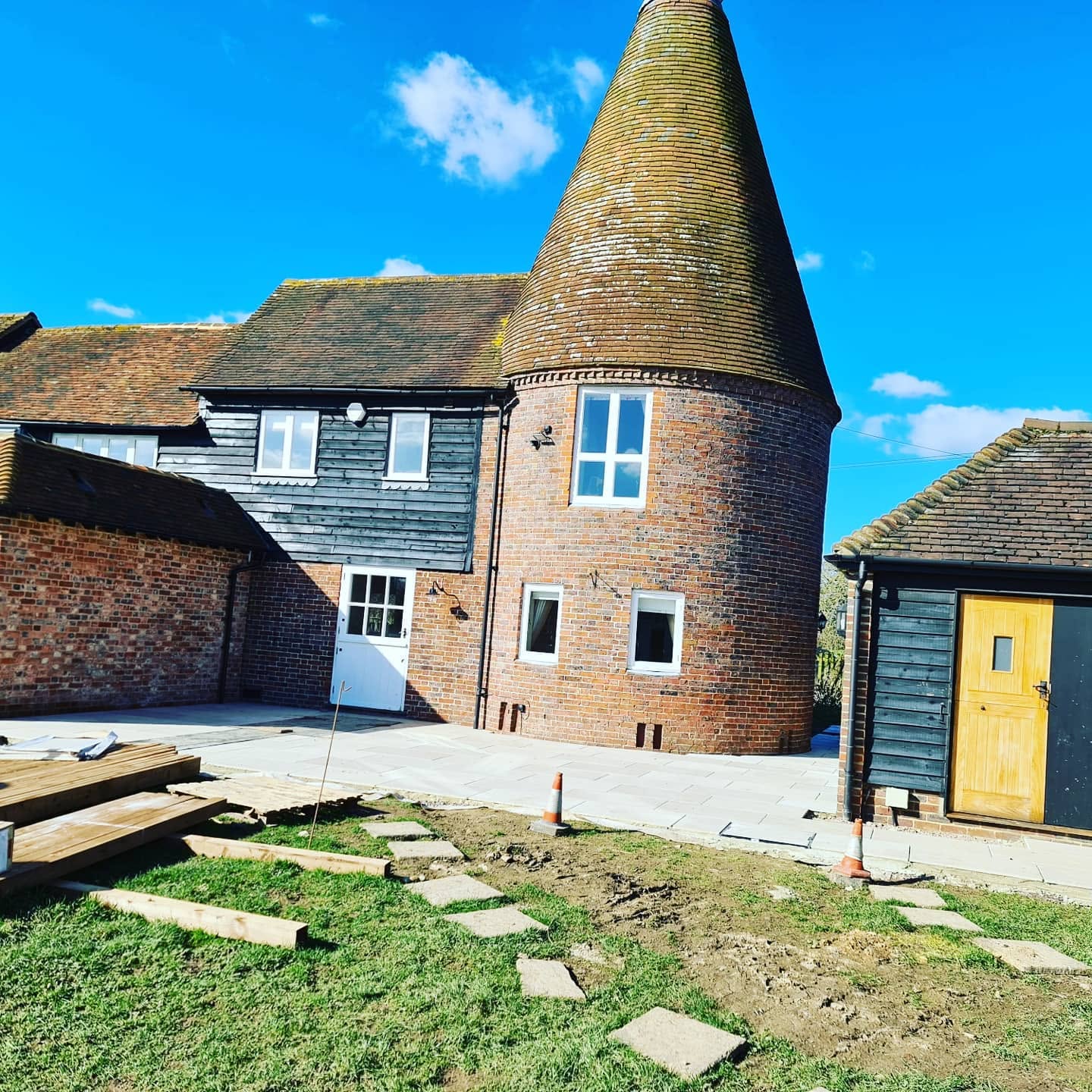
When we arrived, the land behind the oast was still a building site. There was compacted soil, rubble and gravel, with no lawn, paths or planting.
The first job was to clear it and get the levels right. Everything that followed depended on a sound, well-drained base.
We kept the site tidy and safe throughout, with machinery working close to the house.


The finished lawn
About seven weeks later, the same ground is a striped lawn with porcelain stepping stones running across it.
The stones are set level with the turf. That way the mower runs straight over them and nobody catches a toe.
The pale paving sits quietly against the red brick and black weatherboarding of the house.
Clearing the ground
Before any paving could go down, the whole site needed clearing and grading.
Spoil from the building work was removed. The ground was then shaped so surface water runs away from the house.
Getting the levels right at this stage is what keeps a patio flat and a lawn free of puddles for years.


Porcelain paths and steps
Large-format porcelain runs from the house into the garden, with broad steps taking up the change in level.
Porcelain is hard-wearing and resists staining. It needs little more than a sweep and a wash to keep it looking good.
Even step heights and neat, consistent joints make the path safe underfoot in all weathers.
Laying the path
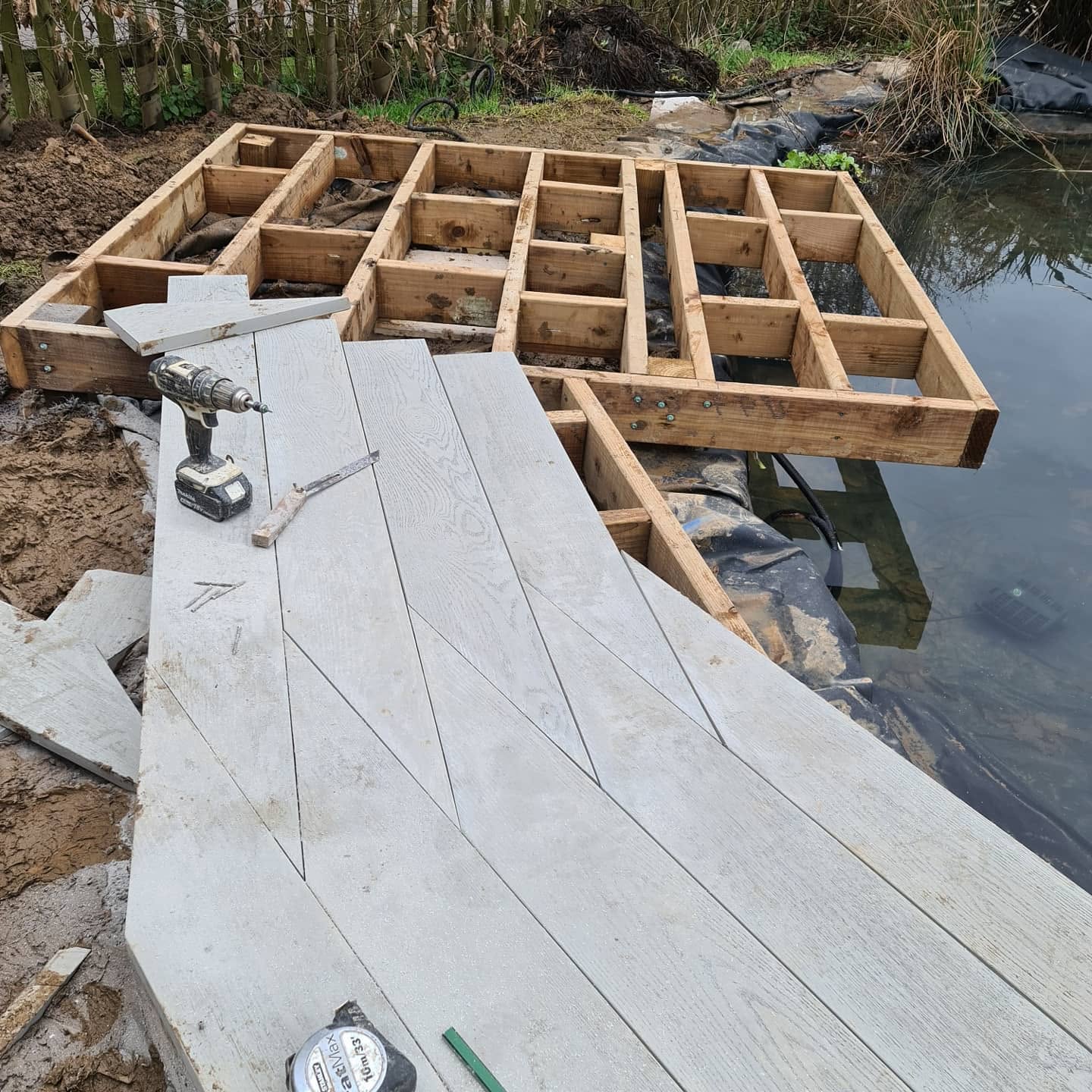
Here the porcelain path is going down, with the timber frame for the pond walkway taking shape in front.
Each slab is bedded on a solid base and checked for level and line as it goes down.
It’s careful, unhurried work. It’s also what gives a path a crisp finish that lasts.

Building over the water
To carry the walkway out over the pond, we built a timber frame on the pond edge.
The porcelain is laid on top, so the path appears to float just above the water.
A frame like this has to be square, level and strong. Any movement underneath would soon show in the paving above.
Shaping the pond and beds
With the pond in place, the beds around it were dug over and prepared for planting.
Mounds of soil along the edge show where new plants will go. They soften the line between the water and the lawn.
A pond like this soon attracts wildlife, from insects to birds coming down to drink.

Setting the stepping stones
Here the line of the stepping stones is being set out across the prepared ground, ready for turf.
Spacing matters. The stones need to match a natural stride, or people end up walking on the grass beside them.
Once the line was right, each stone was bedded and set level with the finished lawn.
Fresh turf, first cut
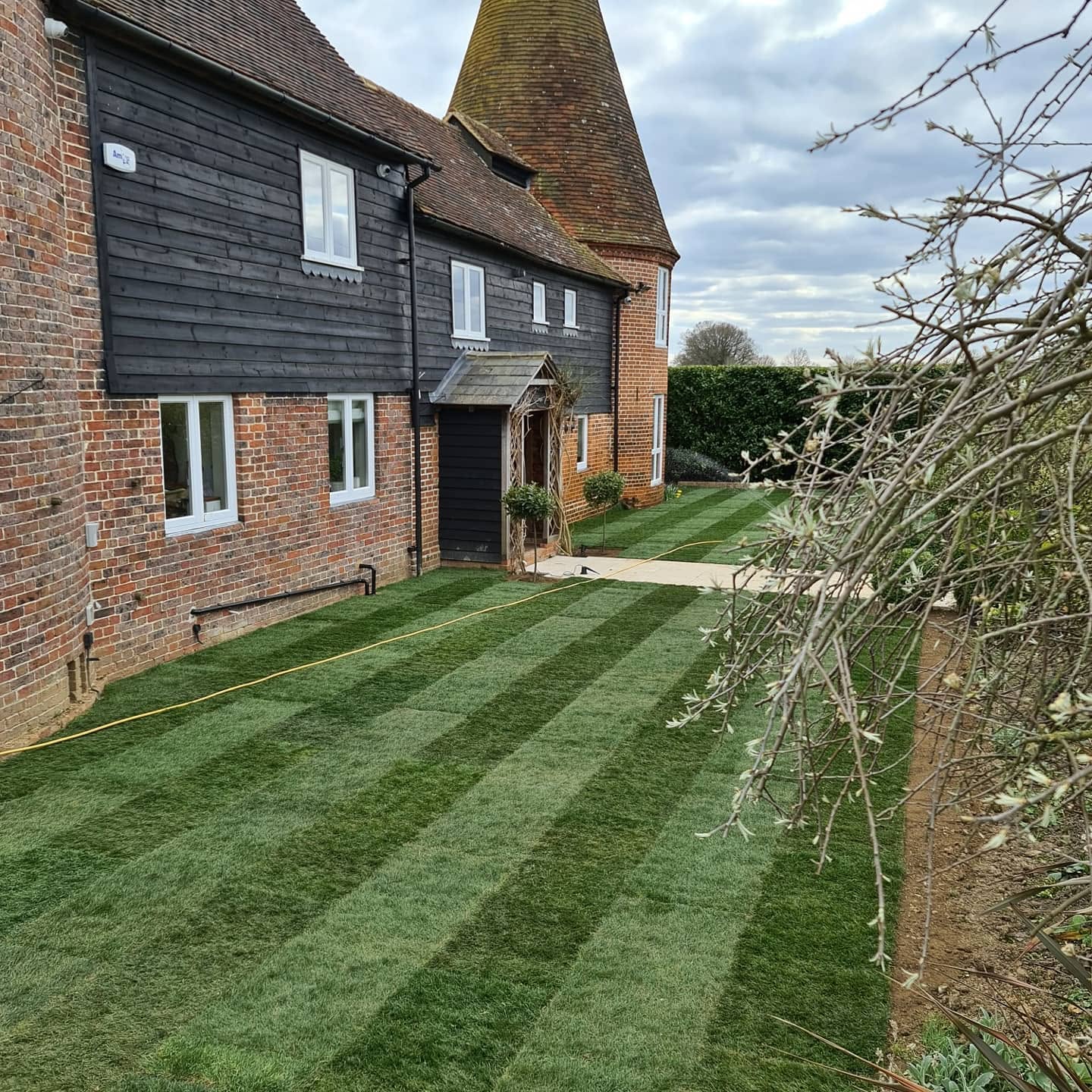
New turf went down across the garden, giving it a green, finished look straight away.
A first cut brought out the stripes along the length of the house.
New turf needs regular watering for its first few weeks while it roots into the soil beneath.

The pond walkway
The finished walkway runs beside the pond to the patio, with water on one side and lawn on the other.
Planting at the water’s edge, including a spiky phormium, gives the pond structure all year.
It’s a place to stop, look at the water and see what comes to visit.
Room to sit outside
The patio gives space for a table and chairs right outside the house.
Pale porcelain keeps the area bright and stays cooler underfoot in summer than darker stone.
From here there are views across the new lawn to the rest of the garden.

A pond for wildlife
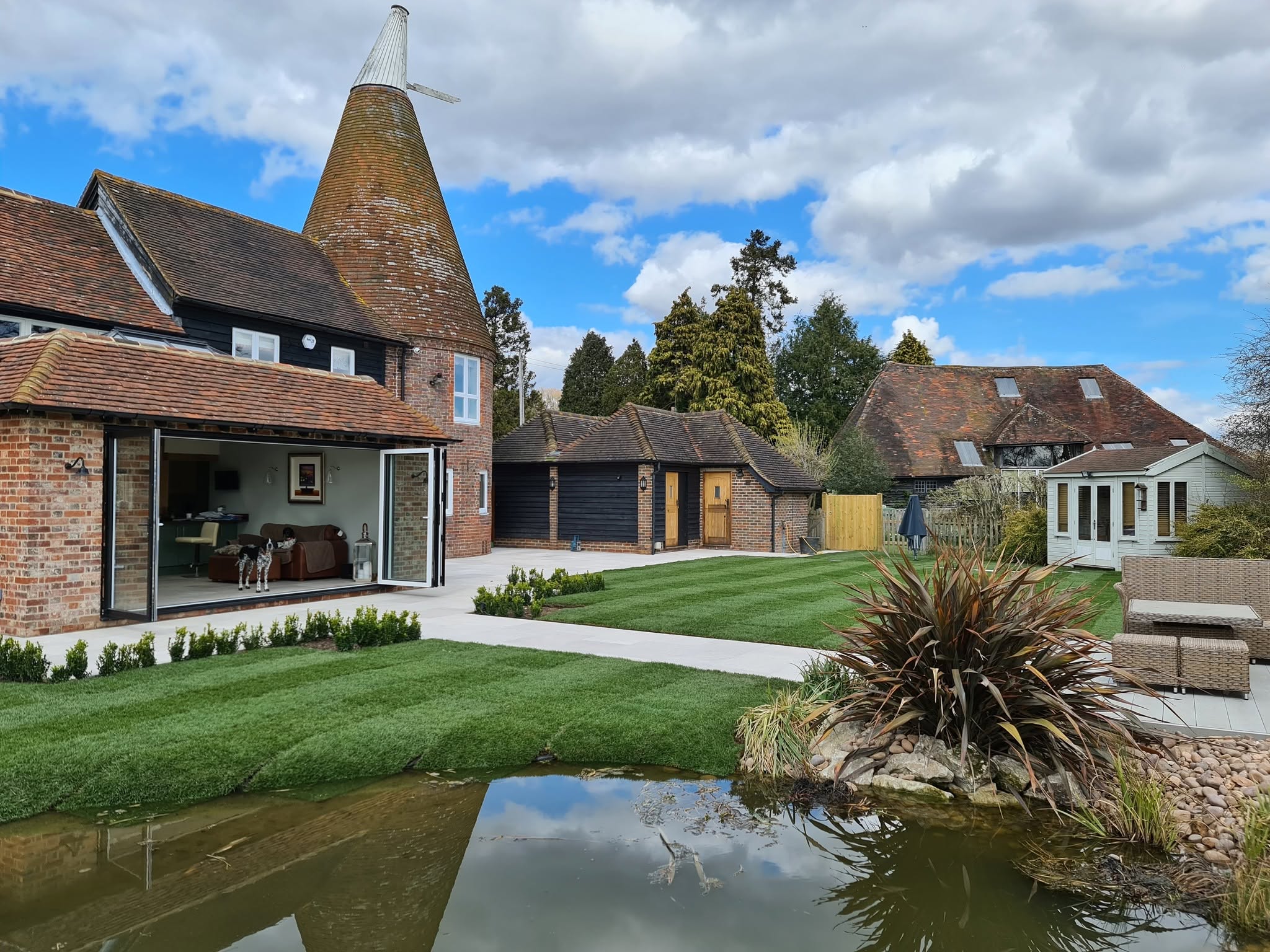
The pond sits at the heart of the garden, in full view of the oast.
Planting around the edges gives wildlife cover and an easy way in and out of the water.
Even a modest pond adds a great deal to a garden. It brings movement, reflections and life.
Garden and house together
Seen from the lawn, the patio, paths and planting all line up with the house.
Low clipped plants along the patio edge give a neat, crisp finish.
It’s a garden that looks as though it has always been there, which was exactly the aim.

Want us to create your ideal outdoor space?
Got Questions? We've got answers
We were on site for about seven weeks, and the garden was completed in 2022. That covered clearing and levelling, the pond, the porcelain paths and patio, stepping stones and turf.
Yes. Here we built a timber frame on the pond edge to carry the porcelain, so the path appears to float above the water. The frame must be square, level and strong, or the paving above will move.
Porcelain works well beside older buildings when the colour is chosen with care. Pale tones sit quietly against brick and weatherboarding, and porcelain is hard-wearing and easy to keep clean.
Yes. Setting stones flush with the turf lets the mower run straight over them and removes a trip hazard. They should also be spaced to a natural stride, so people use them rather than the grass
A pond is one of the best things you can add for wildlife. Planting around the edges gives cover and an easy way in and out, and insects, birds and frogs soon find it.